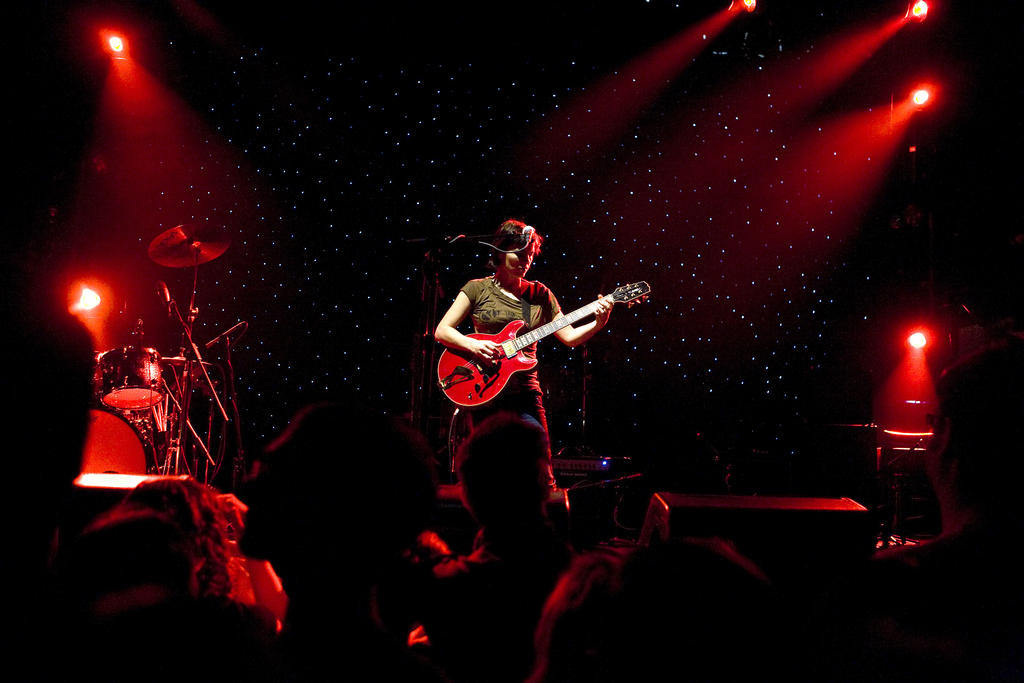
Light is the one part of a photo that you may have virtually no control of, yet is the over (outside of a studio) but the one that is most easily and cheaply exploited. Before we go into details of how to control your camera, it’s more important to appreciate the role of light.
Light, of course, is what makes possible photographic imaging and life in general. But beyond simple illumination, its quantity and absence adds drama, insight, tk etc.
The obvious secret in my “good” photos is that I took them when the light was interesting. On a bright clear day where the light makes everything look the same, I may not bring my camera with me. On a morning as the sun is starting to peek through a week of rain, or rain threatens to creep up on the sun, I’ll bring my bulky camera even if only for the walk to work or lunch break.
A cheap camera can produce a more interesting photo than a costly one, if the former witnesses a plane landing in the Hudson and the other merely captures a plane in flight.
In short, light is the great equalizer between cheap and expensive camera. The difference between how a $5000 camera captures light and a $300 one will be almost insignificant.
I’m going to use the sun as the example light source, but the principles I mention apply to any light source.
How is light affected by the sun’s position?
Let’s start with the obvious case. The sun is shining directly on your subject. The subject, if it’s a lviing being, may be squinting. And its shadow will be behind it, pointing away from you.
If your goal is to get a clear, descriptive image of your subject, then this is great. This is why cameras use flash; to provide a direct light that illuminates what is facing you.
What if the sun is behind the subject?
Instead of the subject, it will be you, the photographer who squints. The subject’s shadow will fall towards you.
In fact, the entire subject may appear to be an upright shadow. This is because the sunlight that illuminates it is far less than the sunlight in the background. This creates what is known as a silhouette.
(photo)
Sometimes silhouettes are more interesting than the details of the subject. If you are trying to get a clear picture of the subject, this is where using a flash is necessary. In this context, it’s called fill flash, because it fills in for the sun.
(photo)
Why not use a flash all the time?
Sometimes you don’t want or need the subject to be evenly lighted. Silhouettes can be beautiful if you find the right shape.
More importantly, the on-camera flash is a poor substitute for the sun. It not only isn’t bright enough for far subjects, but it provides the same kind of direct, artifical light in every context. In some cases, this is necessary, and sometimes beautiful.
But if you use it all the time, all your photos will look the boring same.
Hence, this is how light makes photos interesting.
(Trevi fountain)
There are cases where using a flash is necessary. It would take a book to cover the skilled use of flash. This is not that book.
Instead, I focus mostly on how to avoid using flash when possible. Manual controls give us that flexibility.
What happens when the sun is overhead?
There won’t be many places untouched by the sun’s light.
Very few photographers will elect to schedule a photoshoot at midday. It can be unflattering for general portraiture. In terms of street photography, it can be dull. When everything is bright, nothing is special.
The light is at its brightest, but it is also at its harshest. and it will be very direct.
So it’s not just direction of light, but ambient light. When the sun is at an angle, and you’re in an area with many objects, the light wil lbe diffused and reflected.
When is the best time for daylight?
So that window of a couple hours after sunrise and before sunset is often the best time. A good rule of thumb is to hold your fist out toward the sun but just below it. How many fists between the sun and the horizon is a rough estimate to how many hours of usable daylight you have.
How do clouds affect daylight?
Immensely.
On an overcast day, the harsh light of the sun is effectively broken up into a light source that envelopes the earth, providing a soft, pleasing light. There’s less light overall, but what’s there is generally even and pleasing and soft. Photographers spend a great deal of money to buy lightboxes and flash diffusers to capture this effect.
Spending on artificial light is costly, and there’s a lot of money that people spend on diffusing that light.
Partially cloudy days are the most interesting to me, providing that diffusion but also moments of random brightness and darkness. I’ll bring out my heavy camera on the chance that something pedestrian will look completely different that day.
If you’ve ever seen people walk around with white plastic pieces in front of their flash, they’re trying to soften the direct flash like clouds to the sun.
What about when there is no sun?
Everything I’ve written so far also applies to indoors and nighttime photography, there’s just much less of it to work with.
This requires being creative about light. In many situations, you may not have the option of using flash or of moving the existing light sources around.
So position your subject. If the bar has only one nearby wall lamp, put yourself in between your subject and that lamp. If there’s a nearby TV screen, jukebox, use that light as another source.
If you can’t move either your subject or the light sources, then you either have to use a flash or not look for better opportunities to shoot.
The rest of this book deals with exposure – controlling the quantity of light your camera uses. But it won’t help you much if there’s no light, or the light completely sucks to begin with. so don’t kick yourself if your photo seems bland, sometimes the light just completely sucks, or wasn’t even there to begin with.